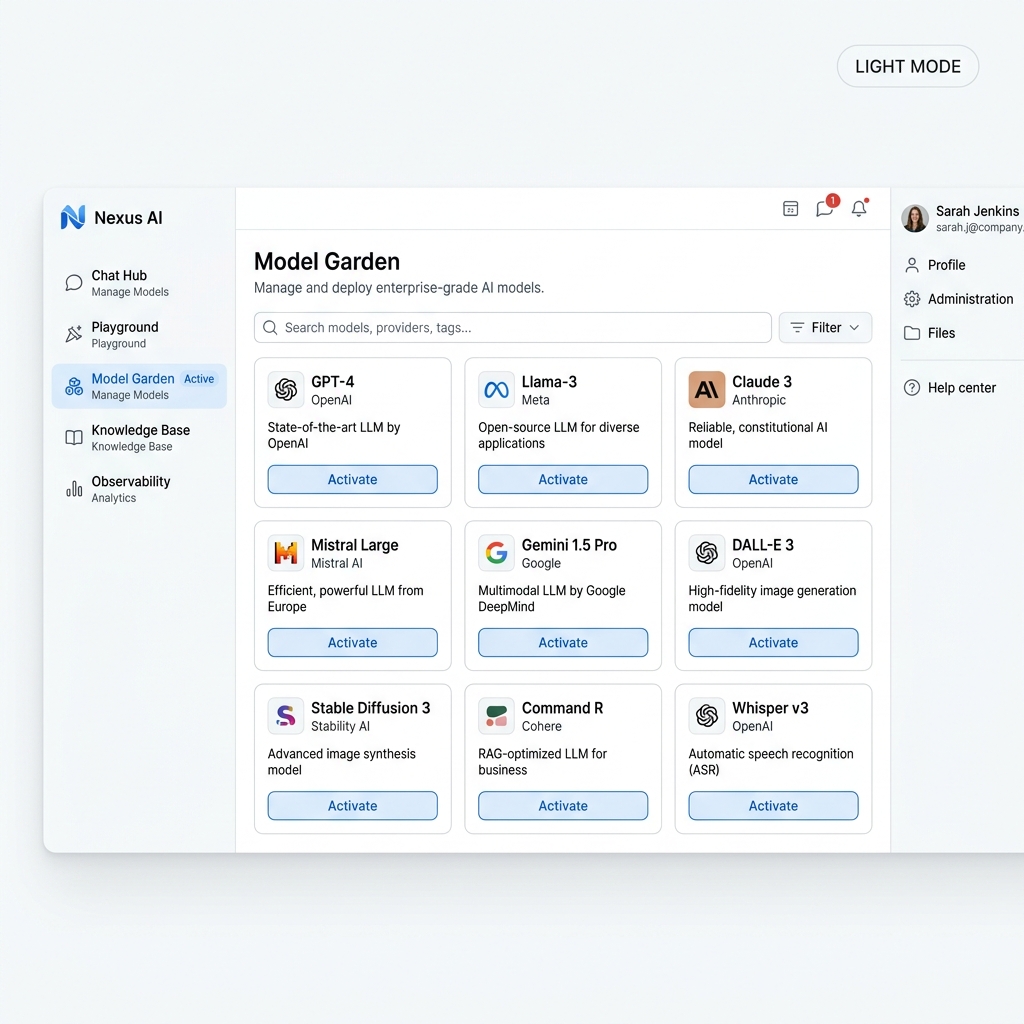
Role: Lead Product Designer (UX/UI) | Timeline: 12 Weeks
1. The Design Challenge: Mapping the Unknown
Nexus AI was an ambitious "zero-to-one" project: a proprietary platform for building and scaling Generative AI and Agentic workflows. As the lead designer, my primary challenge was that the technology was entirely new to the team. We were operating in a "trial and error" environment where the technical processes—RAG pipelines, vector embeddings, and agentic loops—were still being defined as I was designing the interface.
2. My Role: Translating Complexity into Experience
Because the "behind the scenes" logic was a black box for most stakeholders, my role went beyond UI design. I acted as the bridge between raw engineering experiments and a user-friendly enterprise toolchain. I focused on three core pillars:
Requirement Discovery: Working closely with engineers to deconstruct how an "Agent" actually functions so I could build a logical flow for the user.
Process Mapping: Translating a fragmented technical process into the "Garden" metaphor—creating a system where users could intuitively "plant" (deploy) and "nurture" (monitor) AI models and agents.
The Playground Concept: Designing an interactive environment where users could safely experiment with models, reducing the "fear of the unknown" that often comes with new AI tools.
3. Designing the Building Blocks (The Gardens)
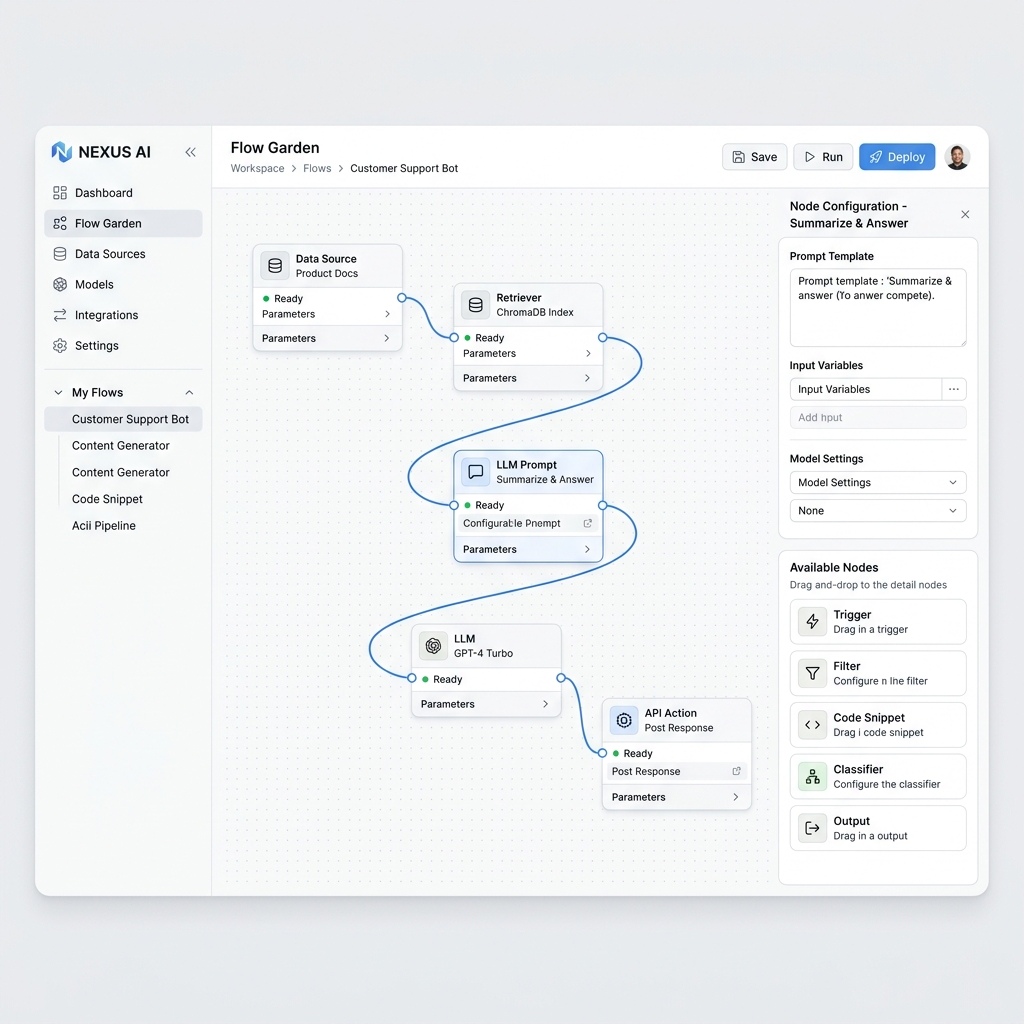
Visualizing Agentic Logic: I designed the "Agent" and "Action" gardens as reusable building blocks. By treating complex AI functions as visual modules, I enabled users to construct sophisticated workflows without needing to understand the underlying code. This visual mental model was the key to moving from a "trial and error" dev process to a structured product experience.
4. Monitoring the "Black Box" (Observation Framework)
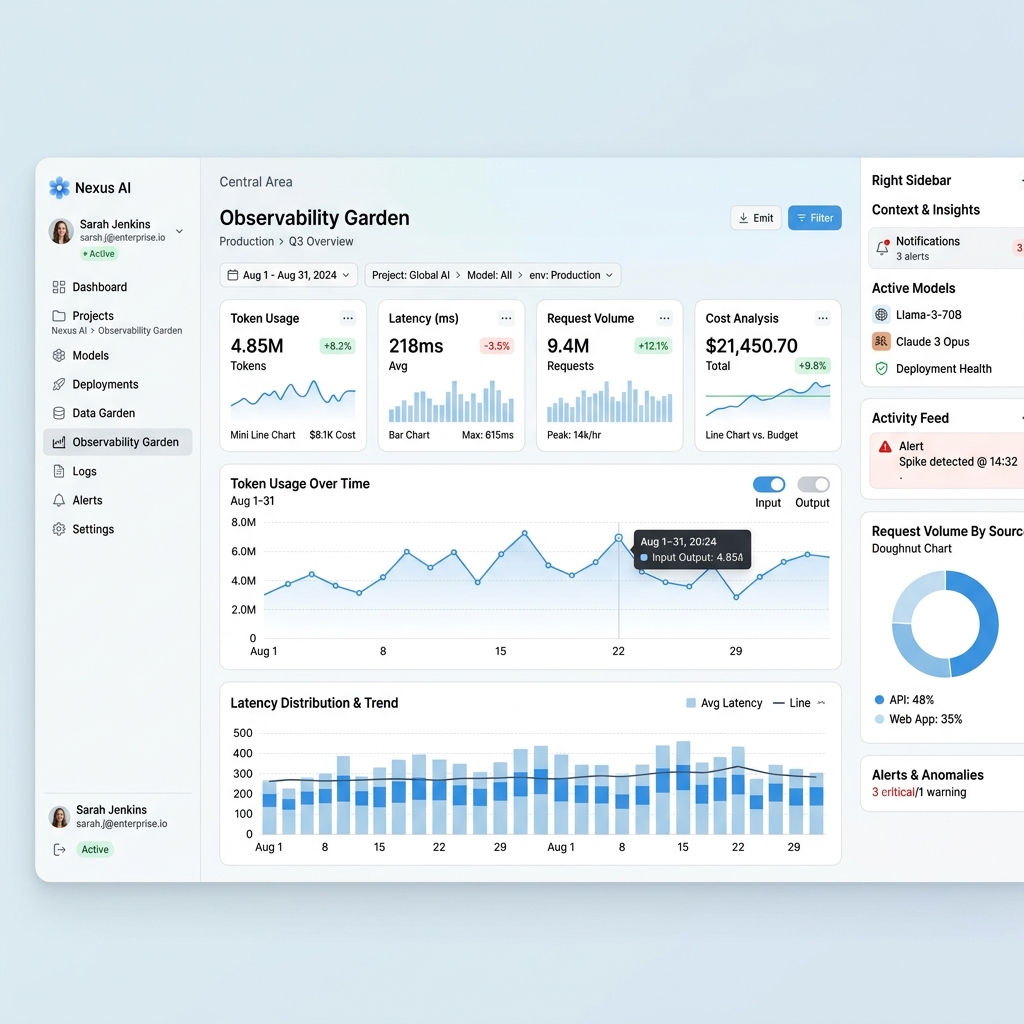
A critical part of my design was the Observation Framework. Since AI behavior in production can be unpredictable, I designed a comprehensive dashboard to monitor agent behavior. This provided the "control" and "oversight" that enterprise clients required, turning a complex data-science problem into a manageable UX solution.
5. Impact: From Chaos to Control
The success of Nexus AI was measured by how quickly we could turn technical uncertainty into a usable tool. By focusing on user-friendly flows and visual logic, we:
Reduced the learning curve for internal teams by providing a consistent mental model for AI concepts.
Created a scalable toolchain that allowed the company to deploy RAG and Agentic apps faster and with significantly more control.
Turned a high-risk "trial and error" scenario into a standardized, enterprise-ready product.